A / 01
৳ 2,480
Checkout that stays on-brand
Use a hosted experience for speed or connect through APIs when your product needs deeper control. Keep choices clear on mobile and desktop.
Bring checkout, routing, payment status and reconciliation into one operating layer—built for businesses selling across Bangladesh.
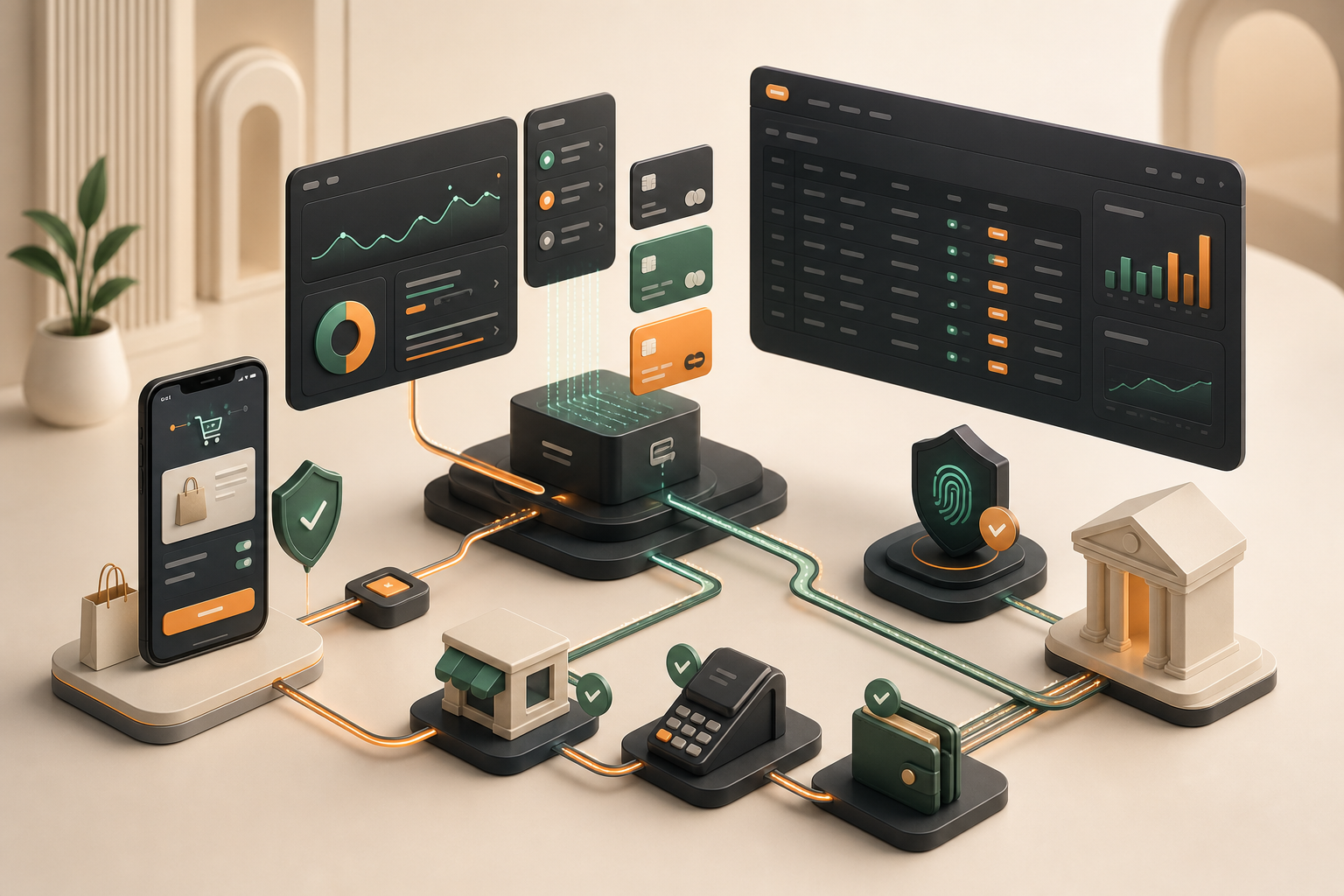
A useful gateway should help teams understand what happened after a customer clicked “pay”. That is why the platform connects checkout with day-to-day payment operations.
Use a hosted experience for speed or connect through APIs when your product needs deeper control. Keep choices clear on mobile and desktop.
Organize attempts by method, state and outcome so your team can respond without disconnected tools.
Track transaction references, fees, refunds and expected settlement records from one operational view.
Set review rules, capture useful context and keep a traceable record for support and follow-up.
Configure the payment mix that fits your audience and merchant profile. Availability is confirmed during onboarding and partner review.
Discuss your payment mix ↗Mobile financial service payments shown only when enabled for the approved project.
Project-specific Nagad access with current limits checked before display.
A Bangladesh Bank-licensed wallet flow available according to live project configuration.
A wallet route for eligible BDT checkout and withdrawal use cases where activated.
Interoperable QR payments scanned from supported banking and wallet apps.

Keep support, finance and product teams aligned around the same payment timeline.
Start with a light integration or design a deeper payment layer around your product. We scope the operating model before implementation.
The merchant backend creates a payment, then sends the customer to a provider-controlled page.
Create BDT payment requests from the server and keep the project credentials out of browser code.
Use a separate test project to prove payment states and signed notifications before production access is activated.
POST /Remotes/create-deposit
Headers:
  apikey: server_secret
  project_id: merchant_project
Body:
  currency: "BDT"
order_id: "ORDER-2048"Use the current technical specification for the complete payload, validate signed postbacks, and never treat the browser return as final payment evidence.
Design checkout and operations around the way you sell—not around a generic template.
Clear mobile checkout and state visibility for online orders.
Payment references and workflows for multi-party commerce.
Structured fee references that reduce manual matching.
Payment requests, booking references and refund-aware support.
Security is not a badge in a footer. It combines protected transmission, controlled access, traceable events and disciplined handling of payment data.
We align business, risk, finance and engineering early so operational questions do not appear at the end.
Business model, journey and payment mix.
Documents, risk context and partner needs.
Choose the route and map payment states.
Test success, failure and refunds.
Launch with monitoring and support.
Payment products involve eligibility, integration and operational choices. These are the points merchants ask about first.
It connects a merchant backend to a hosted payment page or API, returns signed payment-state notifications, and supports settlement and reconciliation.
Approved BDT projects may enable bKash, Nagad, Upay, TAP Wallet and Bangla QR. The active list, limits and commercial terms are project-specific.
Timing depends on KYC and AML review, document readiness, backend work, test evidence and production approval; no fixed timetable is promised.
Keep the merchant reference, accept pending and failed states, verify signed postbacks, and follow the approved refund or withdrawal procedure for the project.
No. Merchant acceptance, payment-method access, limits, fees and production activation depend on review and the approved project configuration.
Share your business model, current setup and launch goal. The launch desk will use it to shape the first conversation.